
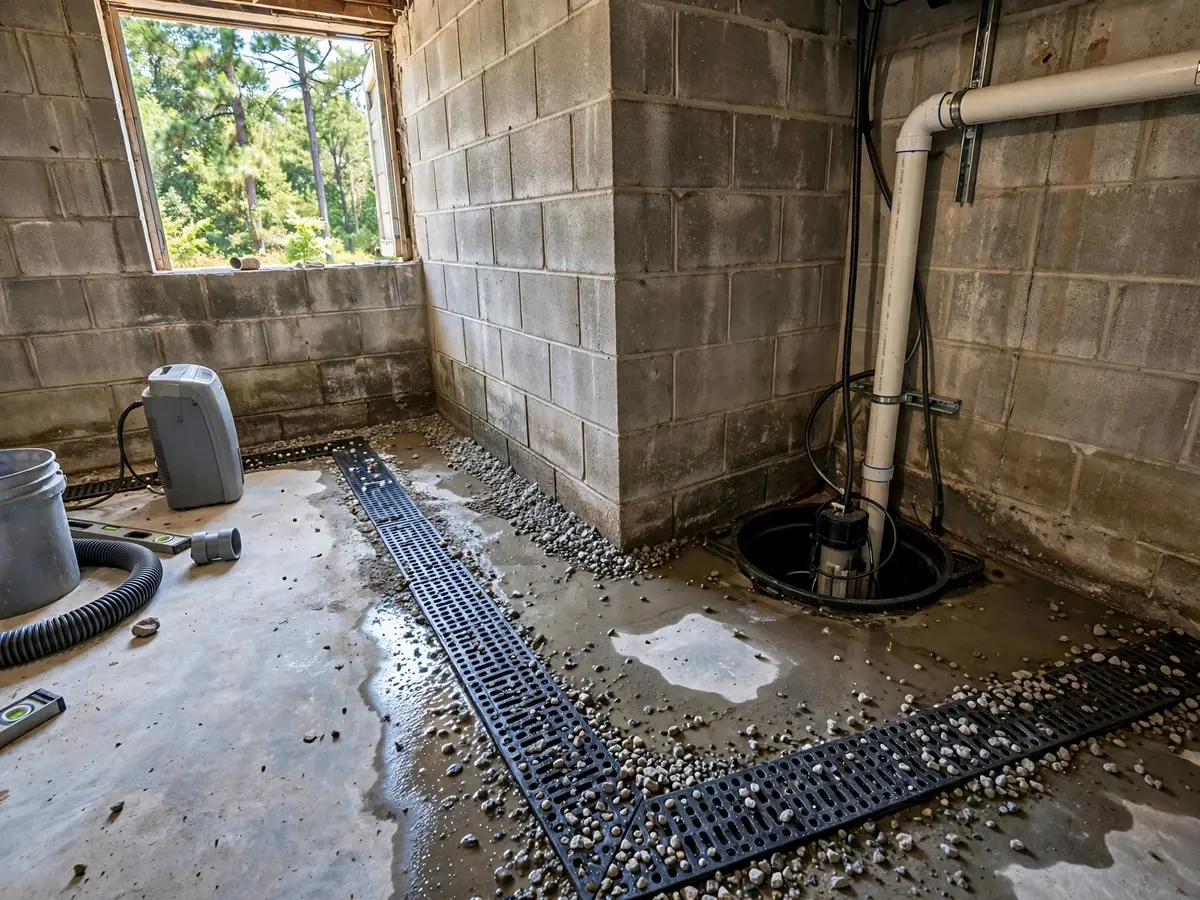
Finding Where the Water Comes From
Basement moisture has more than one source. It can be seepage through the walls, water rising through the floor, condensation on cold pipes or a plumbing leak. The fix depends on the source, and a plan built on a guess can waste thousands.
Tape a square of plastic to the wall or floor for a few days. If moisture collects under the plastic, water is coming through the concrete. If it collects on top, the problem is condensation in the air.
Common Wet-Basement Patterns
The pattern points toward the cause.
- Water at the wall and floor joint after rain: hydrostatic pressure pushing groundwater through the joint.
- Damp patches on the wall: seepage through a crack or porous block.
- Water in the middle of the floor: rising groundwater or a hidden plumbing leak.
- Moisture on pipes and cold walls in summer: condensation, not leaks.
- Water that appears with no rain: a plumbing leak, which needs leak detection.
Waterproofing Options at a Glance
Most wet-basement jobs combine more than one.
| Approach | What it does | Limits |
|---|---|---|
| Interior drain channel and sump | Catches water at the wall base and sends it to a pump | Manages water, does not stop it entering |
| Sump pump with backup | Removes water from the pit automatically | Needs power or a backup source |
| Gutters, downspouts and grading | Keeps roof and surface water away from the house | Does not fix a high water table |
| Crack repair and wall sealing | Closes visible entry points | Best for specific cracks, not general seepage |
| Exterior excavation and membrane | Waterproofs the foundation from outside | Most disruptive, usually a specialty contractor |
Some foundation work, such as exterior excavation and crack injection, is often handled by a waterproofing or masonry contractor, and we tell you when a job needs one.
Older Foundations in Shrewsbury
Many older houses in Shrewsbury sit on stone or block foundations with joints that can seep, and newer houses have poured concrete that can crack. Neither is wrong, but each moves water differently. We look at the house and the history of water before recommending a system.
Interior drainage and a sump pump are the plumbing side of waterproofing, and they are what we install. Homes in Grafton and other nearby towns with sloping lots often start with grading and gutters.
Why Plumbing Comes First
Before spending on waterproofing, rule out a plumbing leak, a failing water heater or a running line. A damp basement caused by a dripping pipe is a much cheaper fix than a drain system. If you are planning to finish the basement, talk to us about plumbing installation before the walls go up.
What Drives Basement Waterproofing Cost
This is planned work, and you get a clear price before work starts.
Standard homeowners insurance usually excludes seepage and groundwater, so assume you will pay for waterproofing yourself. Want your real number? Call (508) 389-4045.
Wet Basement?
Call and describe when and where water appears. We will schedule an assessment with a plumber.
What to Do When Water Is Entering the Basement
Move valuables up, keep electrical devices out of standing water and turn off power to a flooded area only from a dry spot. Do not enter deep water near outlets.
Drain and pump discharge follow the state plumbing standards in 248 CMR 10.00.
Basement Waterproofing Questions in Shrewsbury
A sump pump handles water that reaches the pit. If water comes in at many points, an interior drain system sends it there.
We install interior drain systems and sump pumps, which are the plumbing side of waterproofing. Exterior work and wall repair are often done by specialty contractors.
Tape plastic to the wall or floor for a few days. Moisture under the plastic means water is coming through, and moisture on top means humidity.
It manages water, but a damp basement may still need a dehumidifier. We explain what to expect.
Usually not. Seepage and groundwater are often excluded unless you have a special endorsement.
Many jobs take a few days, depending on length and access.