
Basement Taking on Water: What to Do First
If water is rising in the basement, stay out of the room when the electrical panel, outlets or appliances are in the water. Shut off power to the area at the breaker only if you can reach it from a dry spot. Call the 24/7 line, and if the pit is full and the pump is silent, check that the pump is plugged in and the breaker has not tripped.
Move valuables up and off the floor, then photograph the water and the pit for your insurer. A shop vacuum or a temporary pump can slow the rise while the plumber is on the way.
Why Sump Pumps Fail
Most sump failures come down to power, the float or a worn pump.
| Problem | What you notice | Repair |
|---|---|---|
| Power outage or tripped breaker | Pit fills, pump silent | Restore power, add battery backup |
| Stuck float switch | Pump will not start, or runs nonstop | Reposition or replace the switch |
| Failed check valve | Water falls back into the pit and the pump cycles often | Replace the check valve |
| Burned out motor | Hums or does nothing | Replace the pump |
| Clogged intake or frozen discharge | Weak flow or no discharge | Clear the line or reroute it |
Installing or Replacing a Sump Pump
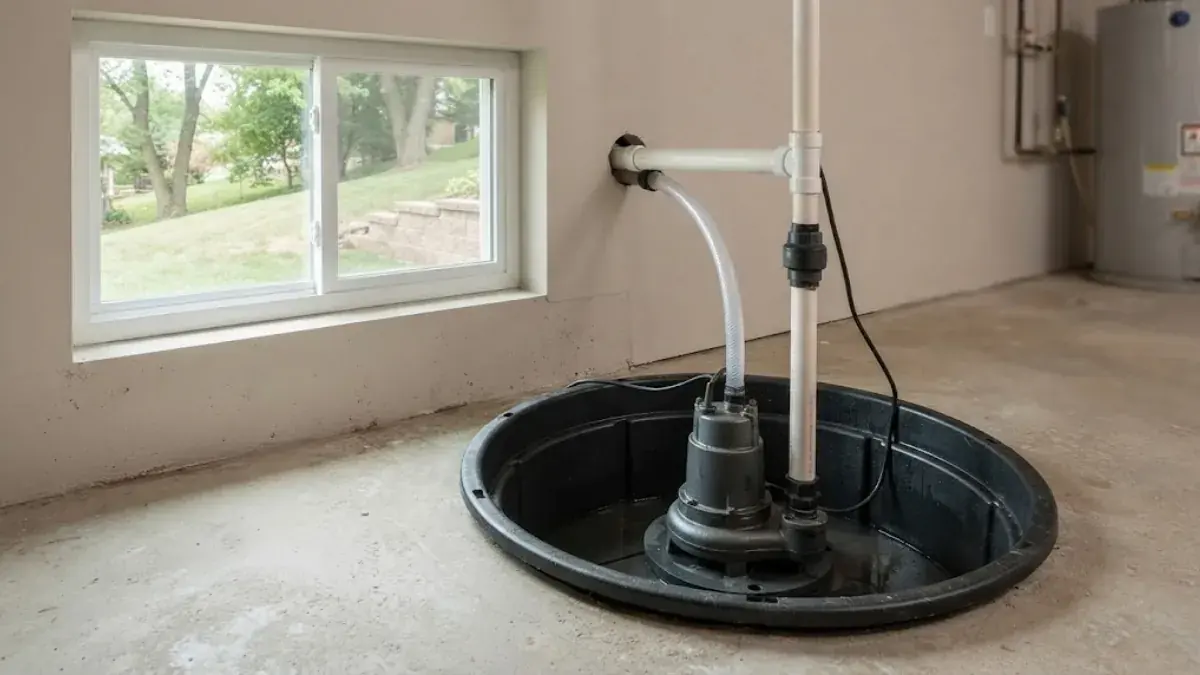
A properly installed pump sits in a pit at the lowest point of the basement and discharges through a pipe to the outside, away from the foundation. A check valve on the discharge keeps water from flowing back, and a cover keeps the pit clean. Replacement is usually a matter of an hour or two, and a first-time install includes cutting the pit and running the discharge.
A battery backup or a water-powered backup covers a power loss during a storm, and a water level alarm warns you before the basement floods. We recommend one of the two for a house that has had water in the basement. Homes on the lake shore can read the Lake Quinsigamond page for what is general and what is not.
Test Your Pump Before the Rain
Pour a bucket of water into the pit and watch the float lift, the pump run and the water drop. Do it before the wet season and after any power outage. If you live near Lake Quinsigamond or in a low spot, make it a seasonal habit.
Wet Basements Beyond the Pump
A sump pump removes water that has already reached the pit, and it does not stop the water from entering. If the basement is damp even when the pump works, grading, gutters, cracks or interior drains may be needed, and basement waterproofing explains the options. A hidden plumbing leak can also look like a wet basement, which leak detection can rule out.
What Shapes the Cost of Sump Pump Work
You get a clear price before work starts.
Standard homeowners policies often exclude groundwater and sump pump failure unless you add a water backup endorsement. Check yours before you rely on it. Want your real number? Call (508) 389-4045.
Pump Silent and Water Rising?
Call the 24/7 line. Tell us what you see and we will book a plumber, same day when an appointment is open.
What to Do When the Pit Is Filling
If the pit is rising, check the breaker and the float, but do not stand in water to do it. Move stored items off the floor and call the line.
A replacement pump and its discharge follow the state plumbing standards in 248 CMR 10.00.
Sump Pump Questions in Shrewsbury
Yes. The 24/7 line takes sump pump calls at any hour, including during storms. Tell the dispatcher how high the water is.
A failed check valve, a stuck float or a high water table can cause it. A plumber checks each one.
Many last roughly seven to ten years, depending on how often they run. A pump near that age is worth replacing before wet weather.
If the pump is your only defense against basement water, a backup is worth having. Power often fails in storms.
The pipe should send water away from the foundation, and local rules may limit where it goes. Ask the town before running it toward a neighbor or the street.
It removes water from the pit, and it does not stop seepage. A damp basement may need drainage, grading or gutter work.