
Active Leak or Running Meter: What to Do First
If water is visibly escaping, shut the main valve and call the 24/7 line. If you only suspect a leak, close every faucet and appliance, then check whether the meter dial or the small leak indicator on it still moves. A moving meter with everything off means water is leaking somewhere between the meter and your fixtures.
Keep the lights off in any room where water is dripping from a ceiling fixture. Place a bucket, move furniture and photograph the damage, then wait for the plumber instead of cutting into the wall yourself. The search is faster and cheaper when the area is left intact.
Symptoms That Start a Leak Call
Callers often start with a symptom, not the word leak. These are the patterns we hear most.
- A high water bill with no change in habits: a slow leak runs day and night, so usage climbs without anyone noticing.
- The meter moves with every tap closed: this is the clearest sign of a leak after the meter.
- A damp patch, stain or bubbled paint: water is reaching a wall or ceiling surface.
- A warm spot on the floor: a hot water line may be leaking under the surface.
- Low water pressure with no clear cause: a leak can steal pressure before it reaches fixtures.
- A musty smell or sound of running water: both can come from inside walls or under the floor.
How We Find a Hidden Leak Without Opening Walls
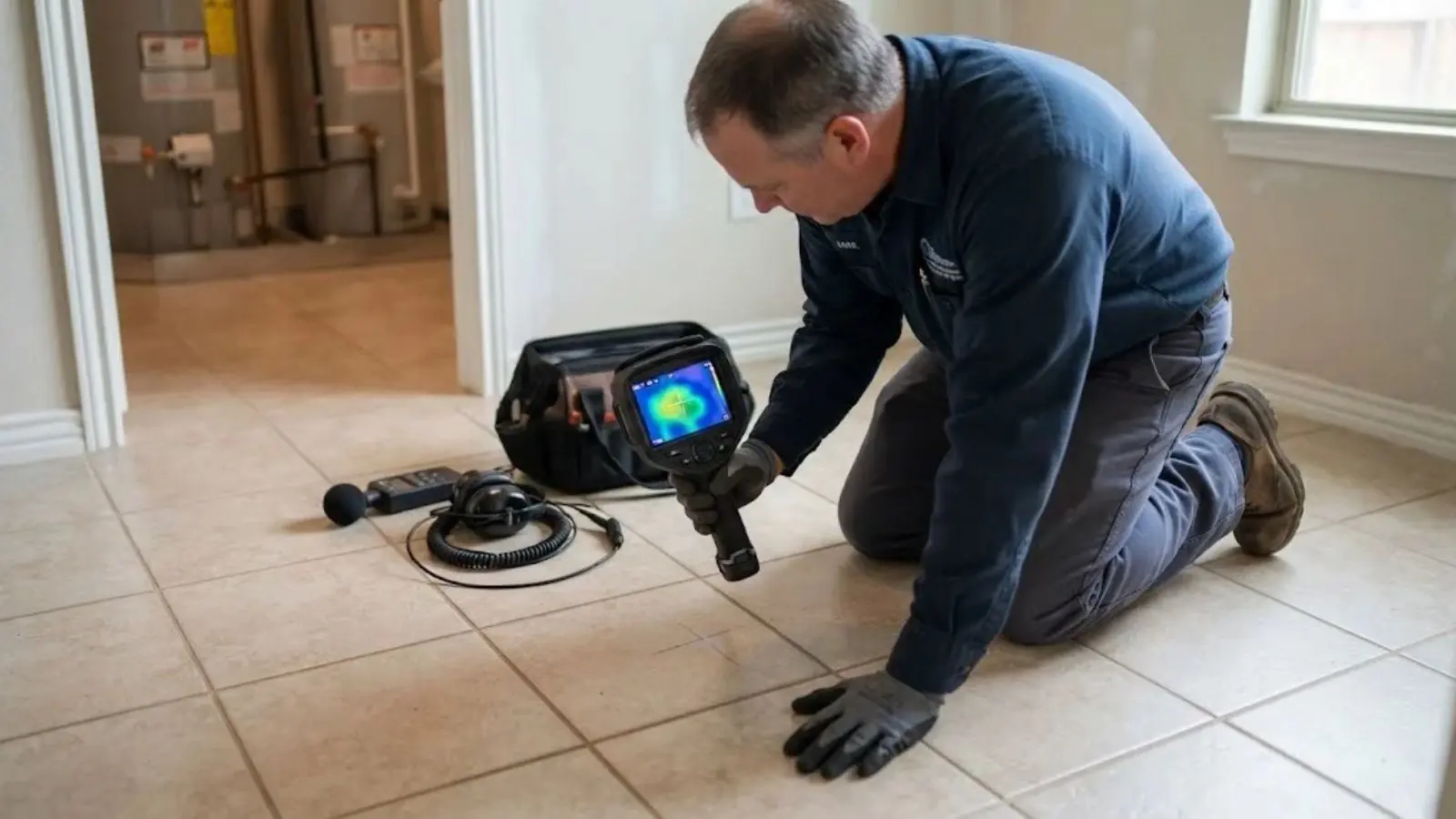
Electronic leak detection narrows the search to a single spot.
- 1Isolate the system.Shutting valves one at a time shows whether the leak is on the supply, the hot side or a single branch.
- 2Pressure test the lines.A gauge on the system shows a drop when water is escaping.
- 3Listen with acoustic gear.Sensitive microphones pick up the sound of water leaving a pipe, even through a floor.
- 4Scan with thermal imaging.A thermal camera shows temperature differences from damp areas or leaking hot lines.
- 5Confirm and mark.The spot is marked before any cutting, so the opening is small and in the right place.
A dye test is another simple tool for tracing a leak from a fixture, and a tracer gas can find a pinhole in a sealed line.
Water Meter Still Running or a High Water Bill
A spike in the bill often shows up before any physical sign of a leak. A running toilet flapper wastes hundreds of gallons a day, and a pinhole in a buried line can do the same without leaving a mark. We check fixtures first, then the line from the meter to the house.
If the bill jumped, ask the Shrewsbury Water Department for the recent meter readings and compare them with your habits. Share that history with the dispatcher, because it helps narrow the search to the supply or to a fixture inside the house. The same advice applies in Grafton, where the readings come from the local water district.
Ceiling, Wall and Attic Leaks
A stain on a ceiling is usually below the leak, not at it, because water travels along framing before it drips. The source may be a bathroom supply line, a drain joint, a roof problem or a condensation issue. A plumber checks the plumbing, and when the roof is the likely source we say so and tell you which trade to call. If the leak turns out to be a split pipe, the fix is covered under burst pipe repair.
Leaks Under the House and in the Crawlspace
Houses with a crawlspace or an unfinished basement hide supply and drain lines that can drip for months. Look for rust stains on pipes, damp insulation and a musty smell. Finding a slow leak under the floor early is far cheaper than replacing a rotted subfloor.
Buried Lines, Irrigation and Pools
A leak in the line from the meter to the house will not show on any wall. It may show as a wet patch in the yard, a lush strip of grass or a meter that runs when everything inside is off, and the fix is covered under water service line repair. Irrigation lines and in-ground pools leak in similar ways, and we trace those too.
Slab leaks are less common in basement houses but happen under garage slabs and additions. If a floor is warm to the touch or water appears where there should be none, call before the damage spreads.
Where Leaks Hide in a Shrewsbury Home
Older houses, which Shrewsbury has plenty of, add galvanized supply lines that rust through from the inside.
| Location | Typical cause | First check |
|---|---|---|
| Basement ceiling or joists | Supply or drain joint above | Run each fixture above and watch |
| Behind a tub or shower wall | Valve, supply or drain connection | Thermal scan, then isolate |
| Under the kitchen sink | Supply line, trap or disposal seal | Dry the cabinet and re-test |
| Between meter and house | Aged service line | Meter test, then locate the line |
| Near the water heater | Fitting, valve or tank | See water heater repair |
What Drives the Cost of Leak Detection
You get a clear price before work starts. Finding the leak is one visit, and repair is quoted once we know where it is.
Homeowners insurance often covers sudden water damage and sometimes the cost to access a leak, but not the repair of the pipe itself or slow leaks over time. Ask your insurer before work starts. Want your real number? Call (508) 389-4045.
Think You Have a Leak?
Call the 24/7 line, describe the symptom and we will plan the search, same day when an appointment is open.
Leak Detection Questions in Shrewsbury
Yes. The 24/7 line takes leak calls at any hour. If water is escaping, shut the main valve and tell the dispatcher what you see.
Turn off every tap and appliance, then watch the meter dial or leak indicator for a few minutes. If it moves, water is leaking somewhere after the meter.
A running toilet, a dripping hot water line or a hidden pipe leak are the common causes. Compare recent meter readings with your habits and tell the plumber.
In most cases yes. Acoustic, thermal and pressure methods narrow the search so any opening is small and in the right place.
A leak in a pipe under a concrete floor. Warm spots on the floor, hissing and unexplained bills are clues.
Yes. We trace irrigation lines and in-ground pool plumbing as well as house plumbing.
Sometimes. Many policies cover access to a sudden leak but not slow leaks or the pipe itself. Ask your agent first.