
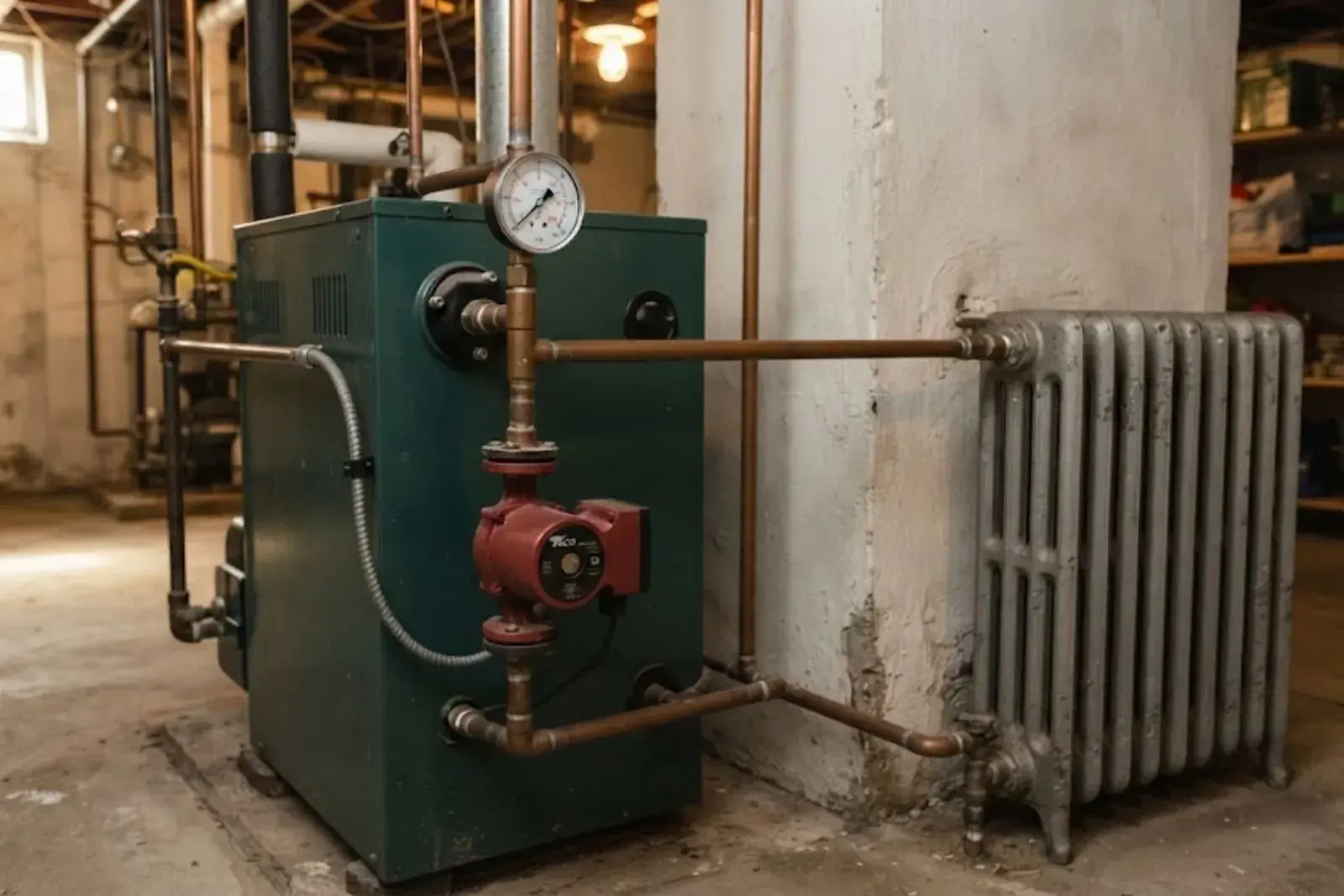
What the Gas Valve Does
The gas valve opens when the boiler's control board calls for heat, and it closes when the burner should stop. It also shuts the gas off if a safety device trips, such as a flame sensor that does not see a flame. It is a safety part as much as a heating part.
Because it handles fuel, a failing gas valve is not a place for guesswork. A valve that sticks open can be dangerous, and one that sticks closed leaves you without heat.
Signs the Gas Valve May Be the Problem
A gas smell is an emergency and is handled differently from the other signs.
| Sign | Possible cause | What to do |
|---|---|---|
| Boiler tries to start, then locks out | Valve not opening or flame sensor fault | Note any error code, then call |
| Gas smell near the boiler | Leak at the valve or a connection | Leave the house and call the gas company and 911 |
| Clicking but no flame | Valve coil or ignition fault | Check the thermostat, then call |
| Burner runs long or won't shut off | Valve sticking open | Turn the boiler off and call |
If You Smell Gas
Do not use switches, phones or flames inside the home. Leave right away, and call 911 and the gas utility from outside. Do not go back in until you are told it is safe.
What You Can Safely Check
Start with the simple things. Make sure the thermostat is set to heat and calling for it, the boiler's power switch is on and the circuit breaker has not tripped. Check that the fuel supply valve is open and that the pressure on the boiler gauge is in the range the manufacturer lists.
If the boiler shows an error code, write it down before you reset anything. That code helps a technician narrow down whether the fault is the valve, the ignition, the flame sensor or the control board.
Why Valve Repair Is Licensed Work
Replacing a gas valve involves disconnecting fuel lines, testing for leaks and checking combustion. Mistakes at any step can cause gas leaks or carbon monoxide. This is a job for a licensed professional with the right tools, and not a weekend repair.
A technician will test the valve, the ignition system and the safety controls. Sometimes the valve is fine and a cheaper part is at fault, which is another reason to start with a diagnosis. Our boiler repair page explains the process.
Steam or Hot Water: Why the Difference Matters
Steam boilers heat water until it turns to steam and rises through the pipes to radiators. Hot water boilers circulate heated water through baseboards or radiators with a pump. The two systems have different controls, different water levels and different failure points.
Tell the technician which type you have. A steam system with a low water cutoff problem looks very different from a hot water system with a failed circulator, even though both leave the house cold.
Preventing a Winter Failure
An annual service visit catches worn parts before they fail. The technician cleans the burner, checks the flame sensor, tests the safety controls and inspects the venting. Many gas valve failures start as intermittent lockouts that a service call would have caught earlier.
Keep the area around the boiler clear, and test your carbon monoxide detector on a schedule. A working detector near the boiler room is an inexpensive safeguard.
What a Service Call Looks Like
The technician begins by confirming the symptom and reading any error code. They then check the thermostat call, the safety circuit and the flame signal, and they test the valve with the right instruments. Only after those tests do they decide whether to replace the valve.
You should get a clear explanation of what failed and why before any part is replaced. Ask to see the old part afterward, since a good technician is glad to show it.
Carbon Monoxide and Your Boiler Room
Any fuel-burning appliance can produce carbon monoxide when something goes wrong. Install detectors on every level of the home and near sleeping areas, and replace them on the schedule the maker lists. If a detector sounds, get everyone outside and call 911.
A boiler that is running but not heating, with sooty marks around the casing, deserves a prompt visit. Do not run it until a technician has looked.
Heating Season in Shrewsbury
Shrewsbury homes include many older houses with steam or hot water heat in their basements. These systems run hard in the cold months, and a failure at the worst time is the common story.
If the boiler has not been serviced in a while, schedule a check before the heating season, not during a cold snap. Ask your fuel supplier or utility about annual service options.
Boiler Down in the Cold?
The 24/7 line can send a plumber to find out whether it is the gas valve or something simpler.
Nearby Towns
Callers from Grafton and Westborough reach the same line, and the boiler questions are the same. When a boiler is past repair, plumbing installation covers related work around replacement.
Boiler Gas Valve Questions
No. It involves fuel lines and combustion testing, and it should be done by a licensed professional.
A technician tests each in order. A thermostat fault is often simple, which is why checking it first is sensible.
Note the code, try a single reset if the manual allows, and call if it locks out again.
Clicking alone is common during ignition attempts. Clicking with no flame suggests an ignition or valve problem.
Call the 24/7 line. A dispatcher can send a plumber, and a safe space to stay warm comes first.