
Why Dye Works for Toilet Leaks
A worn flapper lets water slip from the tank into the bowl without a flush. The water refills the tank in small amounts, and the leak is silent. Dye in the tank shows up in the bowl if the flapper is leaking.
A toilet leak can waste a lot of water over a month. Because it is quiet, many people only notice when the water bill climbs.
How to Run the Dye Test
The test takes about twenty minutes and costs next to nothing.
- 1Remove the tank lidSet it somewhere safe and look at the water level.
- 2Add the dyeDrop in a few drops of food coloring or a dye tablet, enough to color the tank water.
- 3Wait without flushingGive it fifteen to twenty minutes, and keep everyone from using that toilet.
- 4Check the bowlIf color appears in the bowl, the flapper or flush valve seat is leaking.
- 5Flush and clean upFlush to clear the dye. Stained tank parts are harmless but may mark the porcelain.
Dye Test Results and Next Steps
A negative result matters too, since it points you to the next suspect.
| Result | Meaning | Fix |
|---|---|---|
| Color in the bowl | Flapper or seat leaking | Replace the flapper, clean the seat |
| No color, but the toilet runs | Fill valve or float issue | Adjust or replace the fill valve |
| No color, tank level drops | Overflow tube leak or a crack | Check the overflow and tank |
| Clear bowl, water bill still high | Leak elsewhere | Check the meter, then call for detection |
What Dye Cannot Find
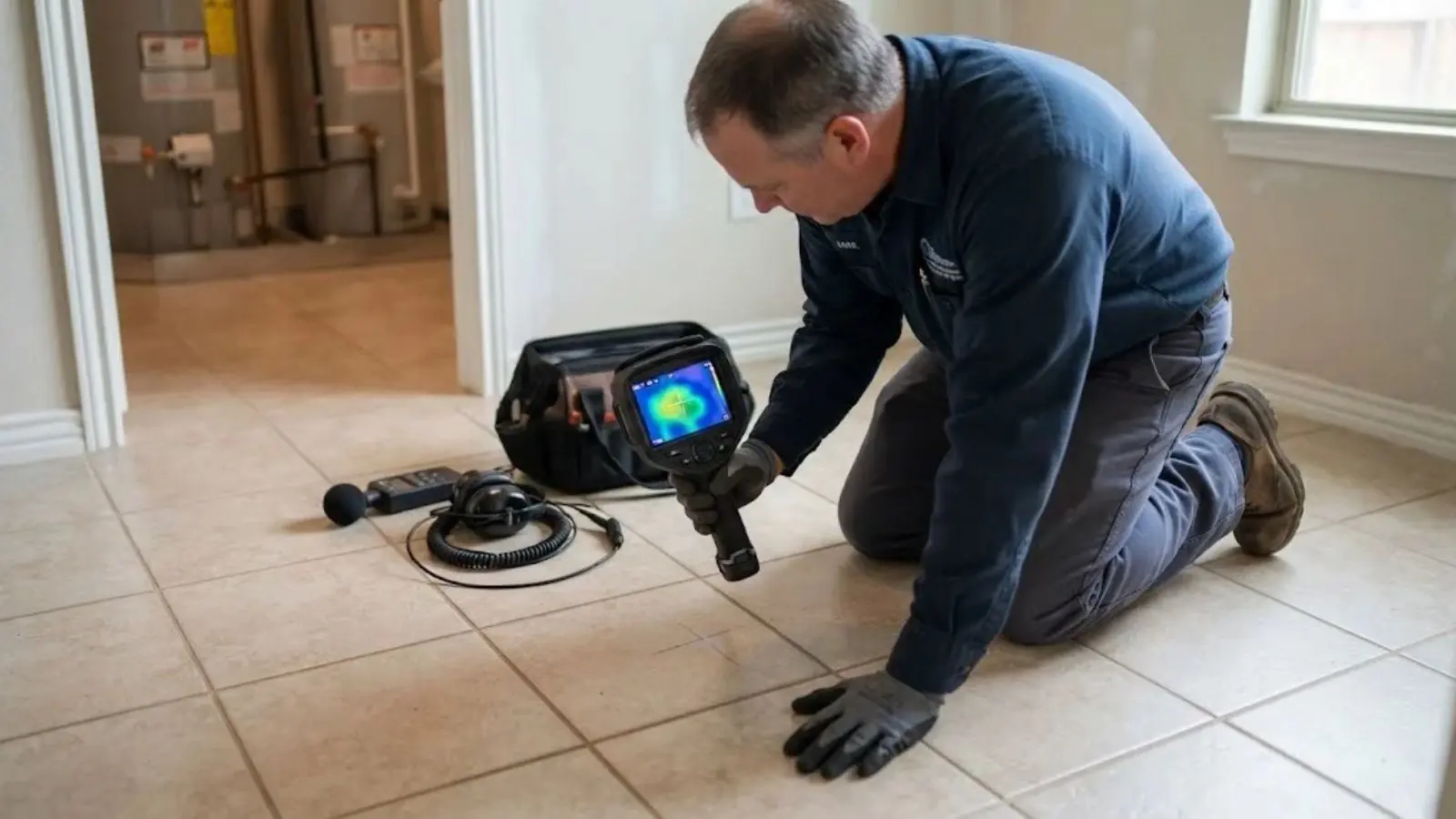
Dye tests toilets. It does not locate a leak in a wall, under a slab or in a buried supply line. For those, a plumber uses acoustic listening devices, thermal imaging and pressure testing to narrow the area before opening anything.
Our leak detection page explains these tools. For a leak in the line between the street and your house, water service line repair covers the fix.
The Meter Test
Shut off every fixture, then read the water meter and check that the leak indicator is still. If the dial or indicator keeps moving, water is leaking somewhere in the house or the service line. Note the reading, wait an hour with nothing running, and read it again.
A change in that hour is a confirmed leak. A plumber can then work out whether it is inside the house or in the buried line.
Other Silent Leaks Worth Checking
Toilets are the most common silent leak, but they are not the only one. Check under sinks for damp cabinets, around the water heater for rust or moisture and at outdoor spigots for drips. A garden hose left connected can also hold a slow leak at the bib.
Look at the ceiling below a bathroom and the wall behind a washing machine. A brown ring, a soft spot or paint bubbling away from the surface is worth following up.
Using the Meter for the Bigger Picture
If the dye test is clean and the meter still runs with everything off, the leak is in a pipe. It may be inside a wall or in the buried line from the street. The next step is to isolate the house from the service line by closing the main valve and watching the meter again.
If the meter stops, the leak is inside the house. If it keeps moving, the leak is in the buried service line, and water service line repair is likely the fix.
Fixing the Flapper Once the Dye Shows It
A flapper is the rubber seal at the bottom of the tank. Shut off the toilet's supply valve, flush to empty the tank and unhook the old flapper from its pegs. Take it to a supplier or match the model printed on the tank, then clip the new one in and adjust the chain so it has a little slack.
Turn the water back on and let the tank refill. Run the dye test again after the repair, since a flapper that seats well keeps the bowl clear.
Seasonal Leaks to Watch
Outdoor spigots can freeze and split in a cold snap, and the leak only shows when the water is turned back on in spring. Check the inside wall behind a hose bib for dampness after the first use. A frost-proof spigot with a hose still attached can fail the same way.
Disconnect hoses before the first freeze and shut off interior stops to outdoor lines if your house has them.
Water Bills and Leaks in Shrewsbury
Water in Shrewsbury comes from the town's groundwater wells and is billed through the town water department. A bill that jumps with no change in habits is worth checking against your meter.
Ask the water department how often your meter is read and whether they offer an alert for unusual use. They can tell you what your account shows, and the answer may save you a search.
Meter Still Moving?
The 24/7 line can send a plumber with listening devices and thermal tools to pinpoint the leak.
Nearby Towns
Homeowners in Northborough and east Worcester call us about the same leaks, and the dye test works the same way there.
Leak Detection Dye Questions
A few drops of food coloring are enough to tint the tank. A stronger color makes the result easier to read.
Yes, in small amounts. Flush afterward to clear it.
Fifteen to twenty minutes is typical. Some leaks are slow, so waiting longer, even overnight, is fine.
Check the meter test next. A moving meter with every fixture off means a leak elsewhere.
They can explain your meter and your usage records. Pinpointing a hidden leak in your home is work for a plumber.