
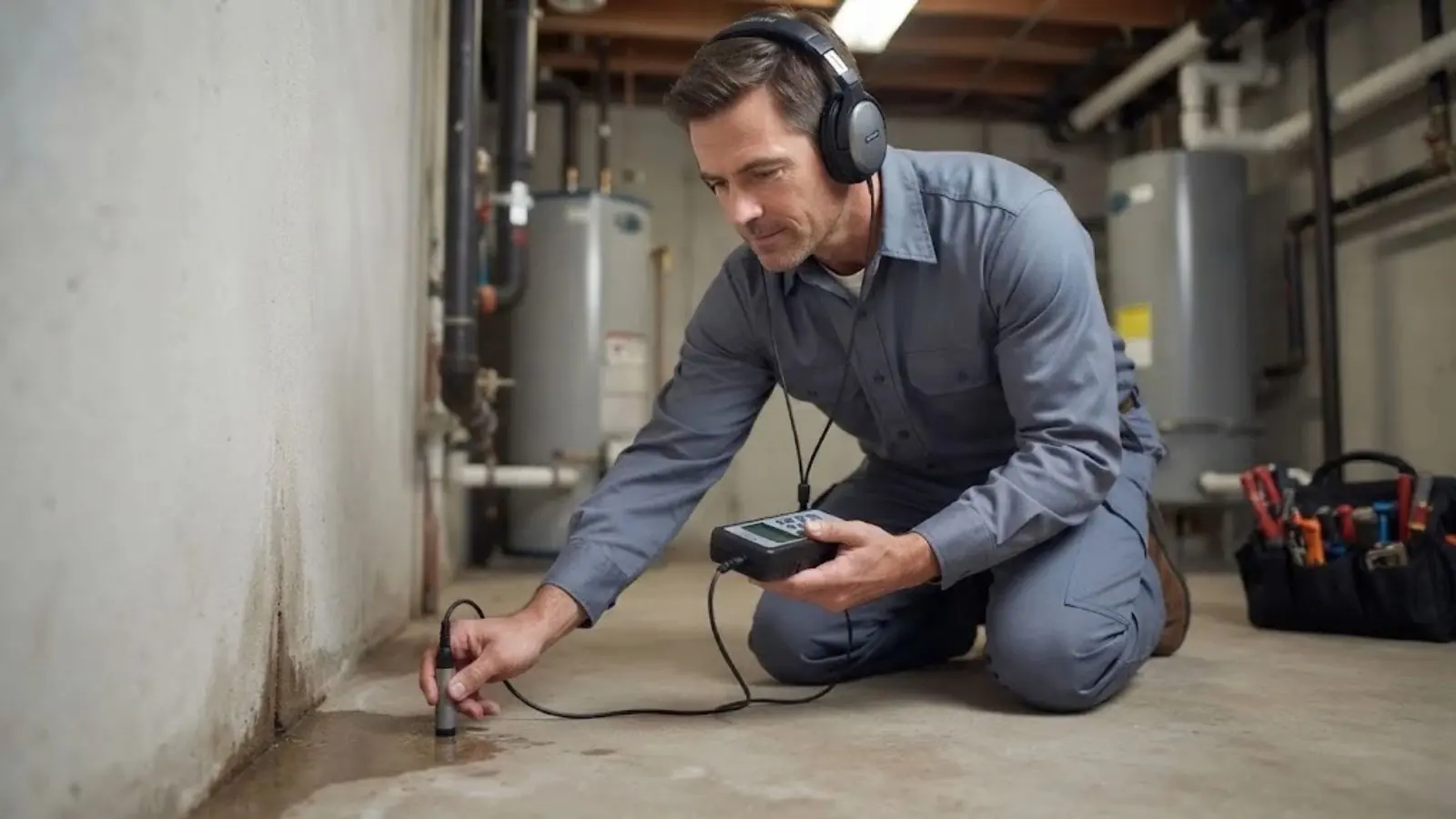
Why Electronics Instead of Demolition
A leak inside a wall or under a slab can wet a large area before it shows on the surface. Opening the wrong spot costs money and makes a mess. Electronic tools narrow the search so the opening is small and in the right place.
Detection is a process of elimination. Each tool gives a clue, and together they point to a location.
The Tools and What They Do
No single tool does everything, which is why a technician carries several.
| Tool | How it works | Best for |
|---|---|---|
| Acoustic listening device | Picks up the hiss of pressurized water escaping | Supply lines in walls and slabs |
| Thermal imaging camera | Shows temperature differences from moisture or hot water | Wet walls, hot water leaks, radiant lines |
| Moisture meter | Measures moisture in drywall, wood and flooring | Confirming wet areas |
| Pressure test | Isolates a line and watches for a pressure drop | Confirming a leak in a section |
| Tracer gas | Uses harmless gas to find the leak path | Hard-to-locate leaks in sealed lines |
What a Detection Visit Looks Like
The technician starts with a conversation. Where did you see the stain, when did the water bill change and which fixtures are on the affected line? Then they check the meter, isolate zones with shutoffs and listen along pipe runs.
Thermal and moisture readings confirm the area, and a pressure test can prove which line is leaking. The goal is a mark on the wall or floor that says the leak is here, not a hole in six places.
Slab Leaks and Hot Water Leaks
A leak under a concrete slab often announces itself with a warm spot on the floor, a sound of running water or an unexplained jump in the hot water bill. Hot water lines show up well on thermal cameras because of the heat they carry.
A slab leak calls for a decision. The line can be repaired by opening the slab, rerouted overhead or replaced, and we explain the options before work starts.
What Detection Cannot Promise
A detection visit narrows the search and gives you a location, but it is not a repair. Very small leaks or leaks in difficult materials can take more than one pass. A good technician tells you how confident they are in the finding.
After the Leak Is Found
Once the leak is pinned down, you have options. A section of pipe can be repaired, a fitting replaced or a long run rerouted. For leaks in the buried line from the street, water service line repair covers the fix.
Tell your insurer promptly. Some policies cover the damage a leak causes but not the repair of the pipe itself, so keep photos, readings and the technician's notes.
Hot Spots, Cold Spots and Water Bills
A warm patch on a floor with no heating pipes underneath suggests a hot water line is leaking. A cold, damp patch under a bathroom suggests a supply or drain leak above it. A water bill that rises month after month without a change in habits points to a leak that runs all the time.
Write down meter readings at the same hour for a few days. A steady climb with no one home is strong evidence for a plumber to start from.
How Long a Search Takes
A simple search in a single room can finish in an hour. A whole-house search with a slab or multiple zones takes longer because each zone has to be isolated and tested. The technician should explain the plan and the limits before beginning.
Ask whether the quote covers the search only or the repair as well. A clear price before work starts avoids confusion on the day.
Leaks in Shrewsbury Homes
Shrewsbury's water supply comes from groundwater wells run by the town's water department, and its meters record your use. A jump in a bill with no change in habits is the best early alarm that a hidden leak exists.
Ask the water department about your account history and meter readings. Their records help a technician date the start of a leak.
Related Pages and Nearby Towns
Our leak detection page describes what a visit covers. Homeowners in Northborough and east Worcester call us for hidden leaks in homes of every age.
Preparing for the Visit
Clear access to the water meter, the main shutoff and the area where you saw signs of water. Note when the problem started, which fixtures run on the affected line and any recent plumbing or renovation work. Photographs of stains with dates are useful.
Keep the house quiet during the visit. Acoustic tools pick up small sounds, and a running dishwasher or a ticking dryer interferes.
Think You Have a Hidden Leak?
Call and a plumber can come with listening, thermal and pressure tools to find it before anyone cuts into a wall.
Electronic Leak Detection Questions
Often yes. Acoustic and thermal tools can narrow the location of a slab leak, and a pressure test confirms the line.
Usually a small opening at the located leak, not several.
Drain leaks use different tools, such as cameras and smoke or dye tests, because the pipes are not under pressure.
Condensation appears on cold pipes in humid air and drips from the surface. A leak persists when the weather changes.
Policies vary. Ask your insurer, and keep records of readings and findings.