
The Idea Behind Pipe Lining
Pipe lining, sometimes called cured-in-place pipe, repairs a damaged pipe from the inside. A flexible tube soaked in resin is pulled or pushed into the old pipe, then inflated against the walls. Heat, light or time cures the resin into a hard new pipe within the old one.
The result is a smooth, joint-free pipe with a slightly smaller inside diameter. The old pipe is left in place, and the lining does the work of carrying the flow.
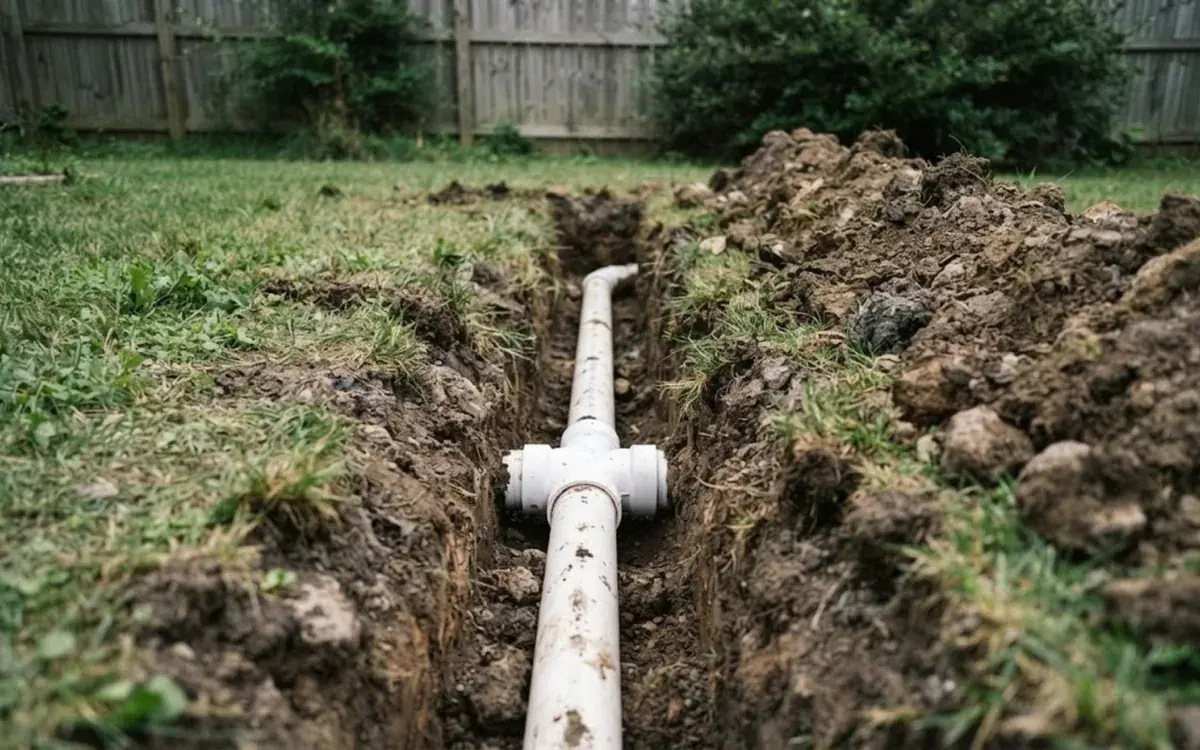
Lining Versus Digging
Neither method is better in every case, and the camera inspection decides which fits.
| Factor | Pipe lining | Open trench replacement |
|---|---|---|
| Yard and driveway disruption | Small access holes | A trench along the line |
| Roots | Sealed out at the joints | Removed with the old pipe |
| Pipe condition needed | Pipe must still hold a shape | Any condition |
| Severe collapse or bellies | Often not suited | Handled directly |
| Time on site | Often shorter | Often longer |
What Lining Can Fix
Lining suits pipes with cracks, open joints, root intrusion and light corrosion. It also helps on long runs where digging would tear up a patio, a driveway or mature landscaping. The new liner seals the joints that roots used to enter.
A cleaned pipe is a must before lining. The line is jetted and cut free of roots, then inspected again so the liner goes into a clear pipe.
What Lining Cannot Fix
A pipe that has collapsed, has a deep belly holding water or has a major offset usually needs excavation. A liner follows the shape it is pulled through, so a sag stays a sag. The camera shows whether a pipe is a lining candidate.
Lining also reduces the pipe's inside diameter slightly. In most residential lines that is not a problem, and the smooth surface can move waste more cleanly than aging clay.
How a Lining Job Runs
Every step is recorded so you have a record of the finished line.
- 1Camera inspectionThe technician records the line and marks defects, bends and connections.
- 2Cleaning the pipeJetting and cutting remove roots and scale so the liner can bond.
- 3Preparing the linerThe resin tube is sized to the pipe and saturated on site or in the shop.
- 4Installing and curingThe liner is placed, inflated and cured, then the ends are opened.
- 5Reinstating and final camera passSide connections are reopened and a last inspection confirms the result.
Questions to Ask Before Choosing
Ask how the lining material is rated and how long the manufacturer expects it to last. Ask whether the installer will reopen every side connection and whether you will get a before and after recording. Ask who is responsible if the line fails later.
Get a clear price before work starts, with the lined length and the access points spelled out. Compare it with a trenching quote for the same run.
Signs Your Line May Need Lining
A line that backs up several times a year, slow drains in the lowest fixtures and gurgling after flushes are the usual alerts. Wet patches or a sunken strip in the lawn above the sewer can mean a break underground. A sewer smell outside the house deserves a look too.
None of these proves the pipe needs lining. They tell you a camera pass is worth the visit, since cleaning without looking only buys time.
How Long Does Lining Take?
Most residential jobs finish in a day or two once the line is clean and access is ready. Curing time depends on the resin and the length of pipe. You may be asked to avoid using water for several hours while it sets.
Planning matters more than speed. A crew that cleans the line, checks it on camera and then lines it will leave you with a record of the work.
Old Sewer Lines in Shrewsbury
Shrewsbury homes built during the streetcar suburb years often have clay or cast iron laterals, and clay joints are the most common place for roots to enter. A camera pass tells you whether your line is cracked, offset or simply scaled.
Connection rules and permits vary. Ask Shrewsbury's public works or sewer office, or the building department, what applies to repairs on your lateral.
Related Pages and Nearby Towns
A camera pass is the first step, covered on our sewer inspection page, and sewer line repair explains lining and replacement in detail. Homeowners in Westborough and Grafton face the same questions with their own older laterals.
Planning the Work Around Your Property
Lining reduces digging, but it still needs access points, usually at a cleanout or through a small excavation. Mark any sprinkler lines, buried wiring or garden beds that sit above the sewer so the crew can work around them.
Tell the installer about trees near the line. Roots outside a lined pipe will still push at it, and a plan to manage them keeps the repair working.
Want a Look at Your Sewer Line?
Call and we will schedule a camera inspection so lining and digging can be compared on real footage.
Pipe Lining Questions
It is a long-term repair when the pipe is a good candidate. Ask the installer about the material's rating and warranty terms.
Usually not. A liner follows the existing shape, so a belly typically needs digging.
You will be asked to limit water use while the liner cures. The installer gives you a time window.
It seals the joints roots enter. Roots can still press on the outside, so a plan for nearby trees helps.
A camera inspection and a technician's review of the footage answer it.